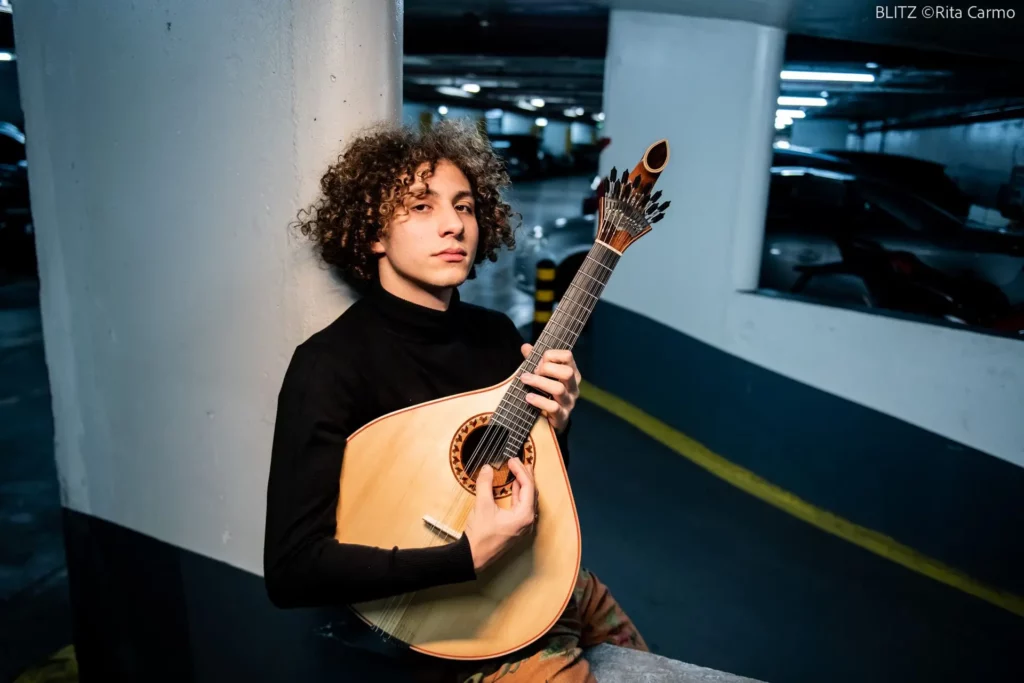
The Portuguese guitar is a plucked string instrument that originated from a cross between ancient European citterns and the 18th-century English guitar. It has become the emblematic voice of fado in Lisbon and Coimbra. A tradition of virtuoso performers and highly codified guitar making has developed around it, which continues to evolve today.
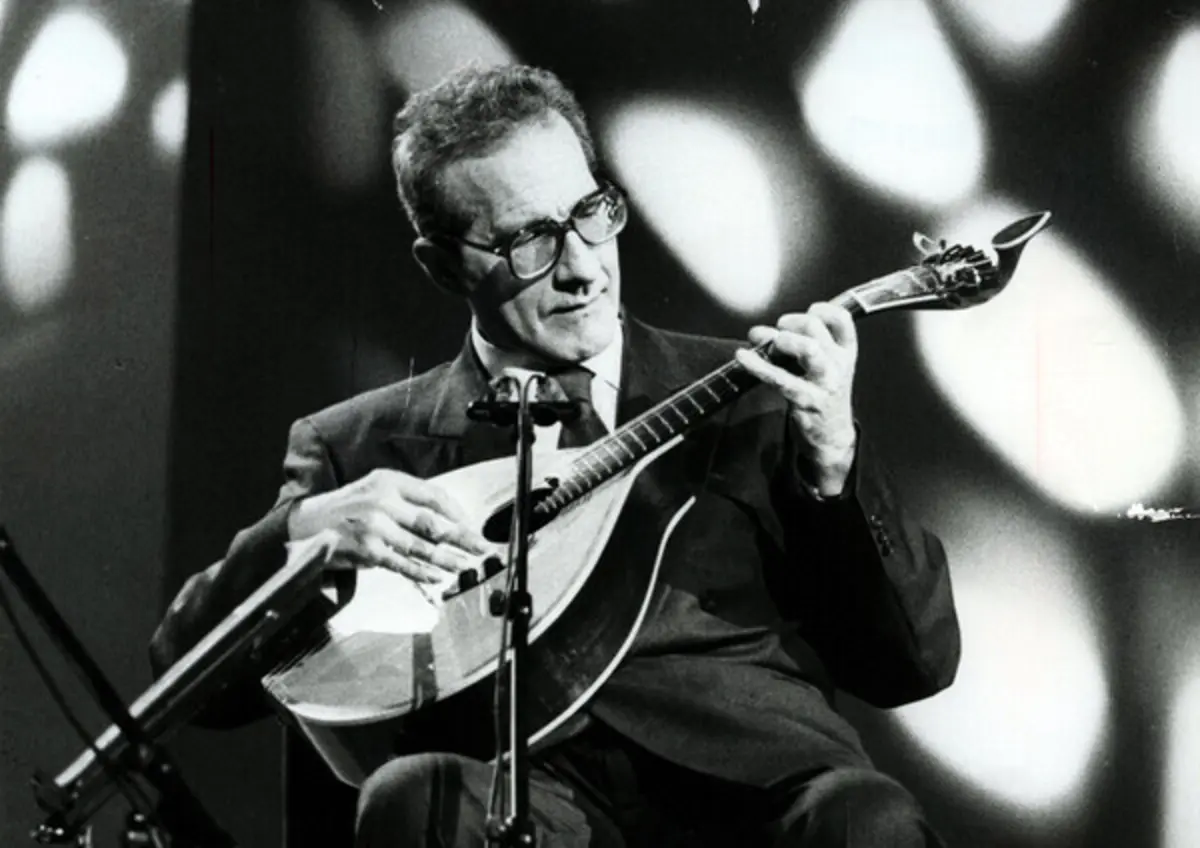
Carlos Paredes : The guitar as an inner voice
Carlos Paredes is undoubtedly the name most often mentioned when discussing Portuguese guitar. Born in Coimbra in 1925, he became such an absolute virtuoso that he is often referred to as the greatest Portuguese guitarist of all time.
His compositions, such as “Verdes Anos,” blend classical and folk influences with a rare emotional intensity, opening up a new expressive territory for the Portuguese guitar that goes far beyond the strict confines of traditional fado. He has recorded iconic instrumental albums, composed film scores, and collaborated with musicians from other genres, bringing the instrument into an almost “universal” dimension.
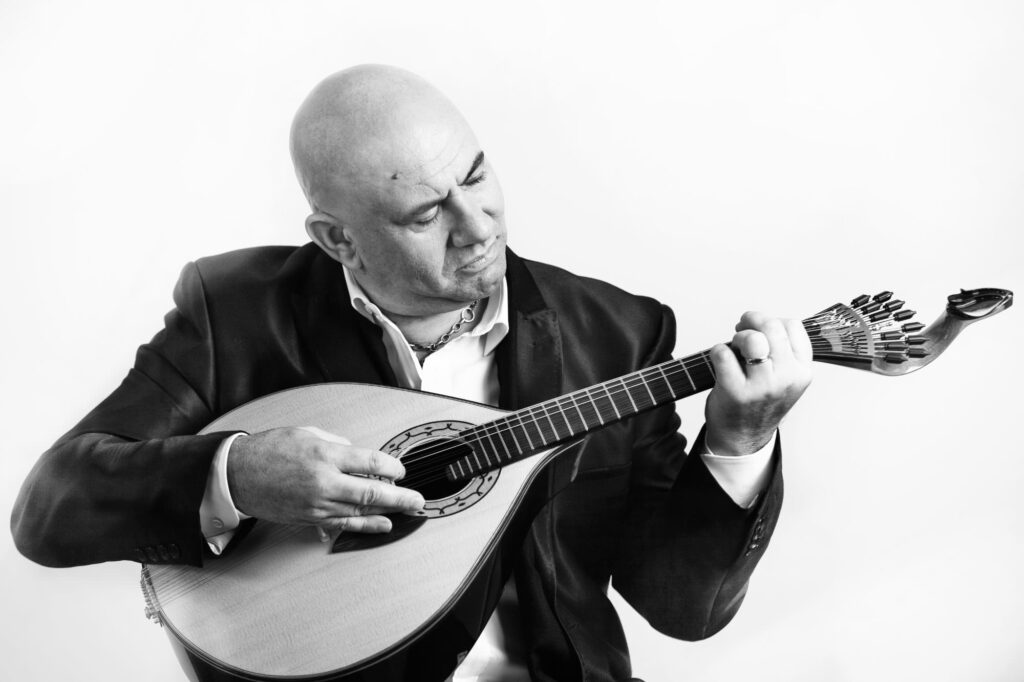
Custódio Castelo and the modern generation
With the rise of contemporary fado, guitarists such as Custódio Castelo have helped to modernize the language of Portuguese guitar while remaining deeply rooted in tradition. Working closely with some of the greatest voices in fado, he has developed a style that is both lyrical and extremely technical, composed of instrumental pieces that have become benchmarks for new guitarists.
This generation also introduced the instrument into more varied contexts: international collaborations, orchestral formations, experiments with classical ensembles and even Chinese orchestras, demonstrating just how flexible and modern the Portuguese guitar can be.
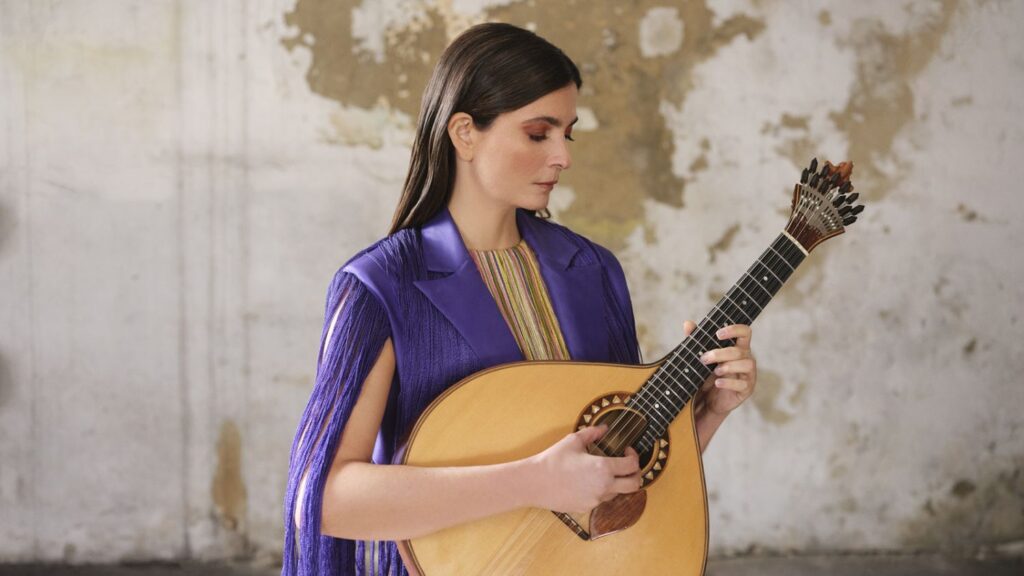
Marta Pereira da Costa : a new voice
Marta Pereira da Costa occupies a special place in this recent history. Recognized as the first woman to play the Portuguese guitar professionally in fado, she opened up a new space for representation in a field that had long been dominated by men.
Musically, she further expanded the scope of the instrument by incorporating elements of jazz, world music, and broader Portuguese music, particularly on her albums and international tours. Her appearances on prestigious stages helped to introduce the Portuguese guitar to a global audience, far beyond the borders of Portugal.
Gaspar Varela : the prodigy of the new generation
Gaspar Varela embodies the next generation of Portuguese guitarists, not only through his precocious mastery of the instrument, but above all through the way he brings tradition and modernity into dialogue. Trained in the world of fado, he retains the classical language of the instrument with melodic phrasing, ornamentation, and a sense of vocal accompaniment, while projecting it into much broader aesthetics.
On stage and in the studio, he does not hesitate to mix the Portuguese guitar with pop, electronic music, or grooves inspired by African and Brazilian music, notably through his international collaborations and his work with projects such as “Expresso Transatlântico”. This hybrid approach transforms the Portuguese guitar into an instrument of dialogue between fado, Lusophone cultures, and contemporary music, showing that it can be both a guardian of tradition and a driver of innovation.