
History
Immerse yourself in the fascinating history of the Portuguese guitar
Introduction
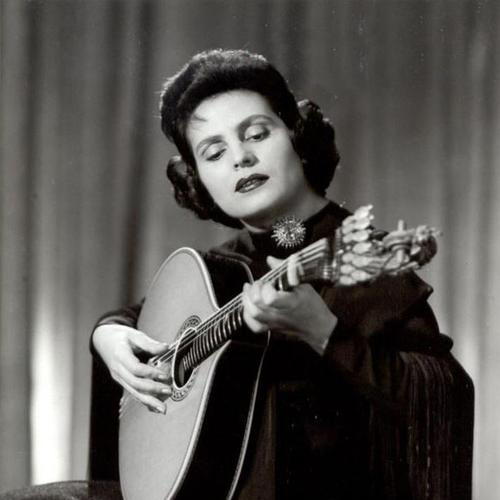
The Portuguese guitar is a plucked string instrument that originated from a cross between ancient European citterns and the 18th-century English guitar. It has become the emblematic voice of fado in Lisbon and Coimbra. A tradition of virtuoso performers and highly codified luthiery has developed around it, which continues to evolve today.
Origins and ancestors
The Portuguese guitar descends from the family of European Renaissance citterns, which are themselves linked to the medieval cittern that appeared in Europe in the 13th century. These instruments, used in Italian, French, and English courts, were already characterized by metal strings and a specific tuning that the Portuguese guitar has partly retained.
In the 18th century, the English guitar, very popular among the European bourgeoisie, arrived in Portugal via the port of Porto and encountered the local cittern. Masters such as António da Silva Leite contributed to the “nationalization” of the instrument, which gradually took on the name of Portuguese guitar and became popular in urban salons before becoming associated with fado.
The birth of the modern instrument
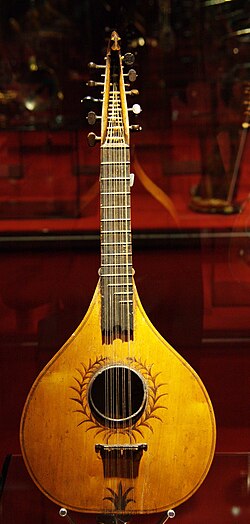
At the end of the 18th and 19th centuries, the Portuguese guitar gradually established itself as a 12-string instrument with steel strings arranged in 6 rows (orders), with a pear or mandarin-shaped body and a top made of fine wood, often cedar. It was clearly distinct from the “Spanish” guitar with its 6 gut or nylon strings, while retaining a cittern-style playing technique.
At the same time, fado developed in Lisbon and Coimbra, and the Portuguese guitar became its emblematic solo instrument, sometimes even predating fado as a structured practice, according to some sources that date the instrument to the late 18th century. From the 19th century onwards, it could be found in taverns, theaters, and student circles, where it accompanied popular songs and serenades.
Lisbon, Coimbra and the guitar icons
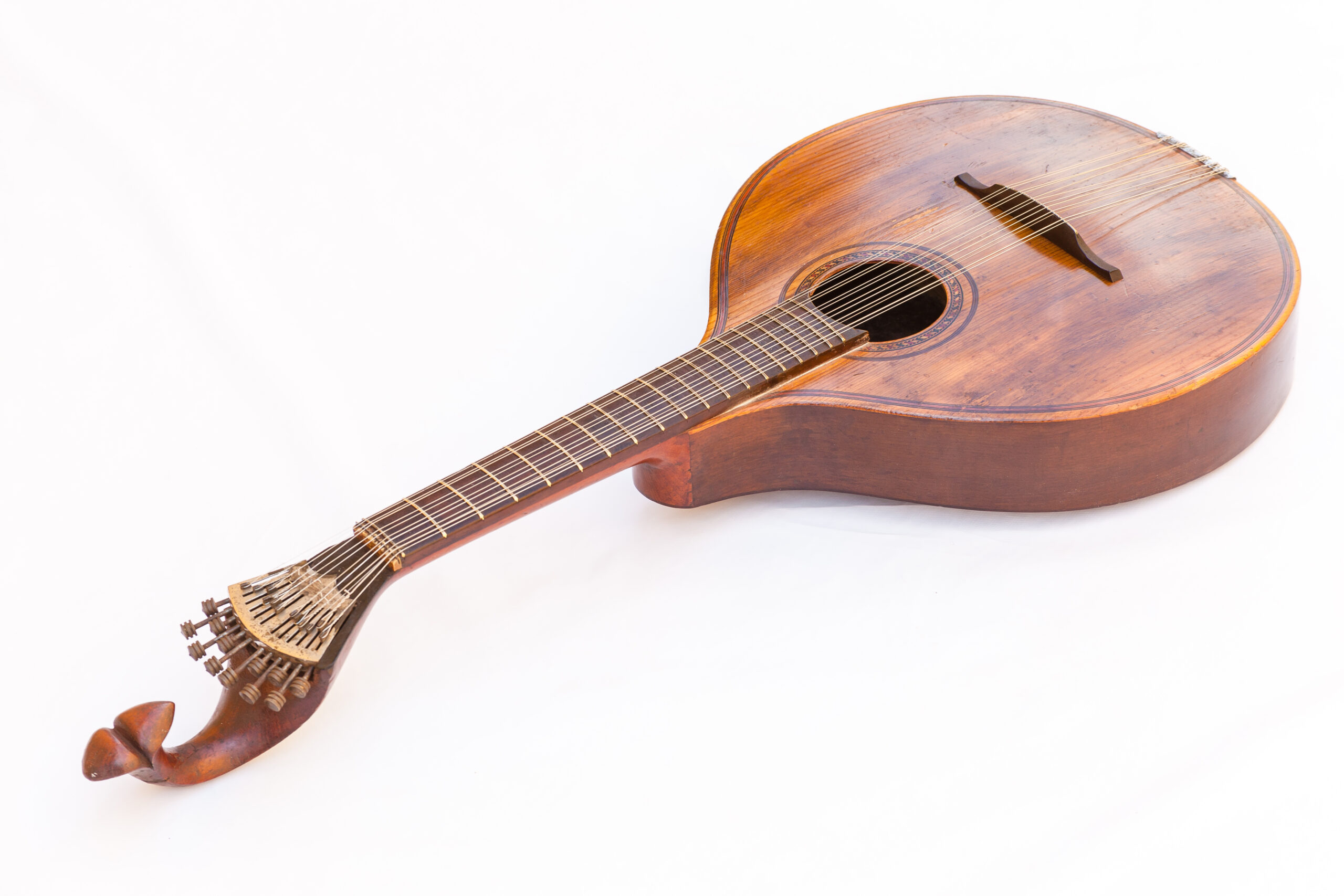
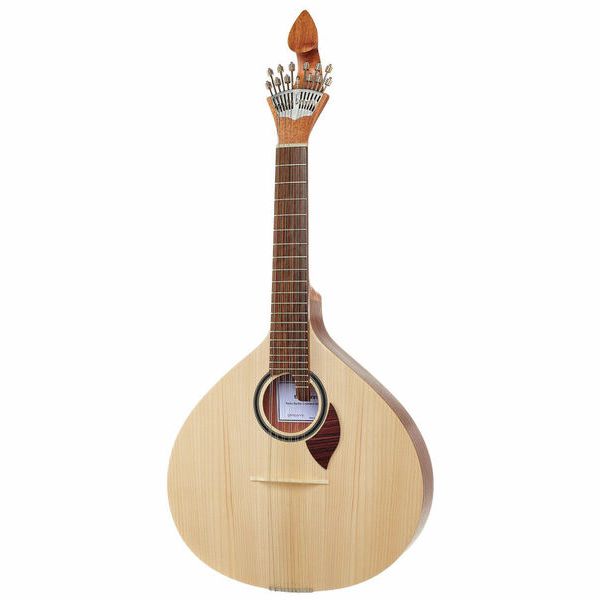
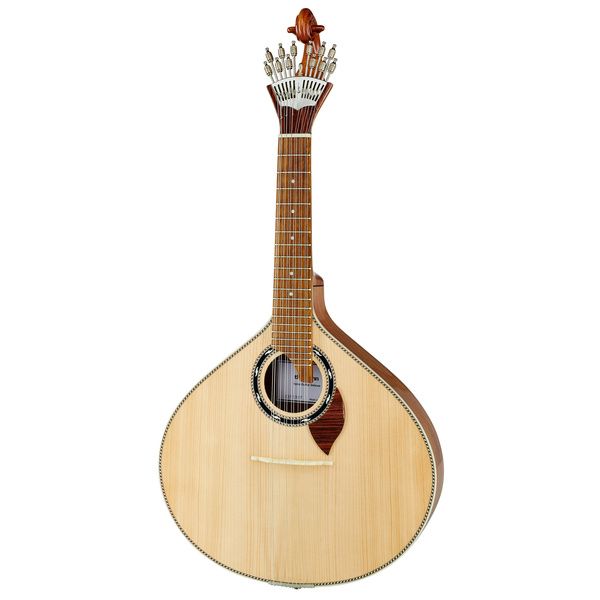
Today, there are two main models: the Lisbon guitar, with a scroll-shaped head (caracol), and the Coimbra guitar, with a teardrop-shaped head (lágrima), with differences in body shape, tuning, and string tension. The Coimbra guitar, with its lower register and darker tone, is particularly associated with academic songs, while the Lisbon guitar dominates urban fado.
Among the “guitar heroes” of the Portuguese guitar, Artur Paredes played a key role in adapting the instrument to the Coimbra style in the early 20th century. His son Carlos Paredes then revolutionized the language of the instrument, elevating it to the status of a modern solo instrument and exploring a highly complex instrumental repertoire.
Other major performers include Custódio Castelo, who renewed the accompaniment of contemporary fado, as well as guitarists such as Pedro Caldeira Cabral, Ricardo Araújo, Carlos Gonçalves, and Marta Pereira da Costa, who have contributed to diversifying styles and internationalizing the instrument. The Portuguese guitar is also inseparable from the great voices of fado such as Amália Rodrigues, whose recordings have spread this sound throughout the world.
The evolution of luthiery
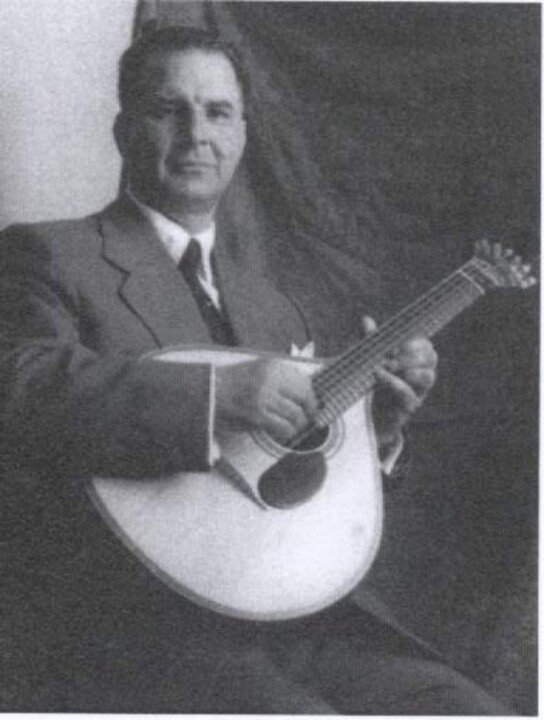
In terms of construction, the Portuguese guitar is traditionally made from fine woods: cedar or spruce top, walnut, maple, or rosewood back and sides, with a bone bridge and a highly arched body to project the sound. The specific fan-shaped tuning mechanism at the end of the neck, inherited from the cittern, also contributes to its recognizable aesthetic.
Since the end of the 20th century, guitar makers have incorporated new materials and techniques to meet the demands of volume, projection, and amplification: for example, some guitar makers are experimenting with modern reinforcements or composite materials such as carbon fiber. In addition, electronics (pickups, piezo systems) are increasingly being integrated, allowing the instrument to adapt to contemporary stages without losing its characteristic metallic tone.
The Portuguese guitar today
Today, the Portuguese guitar remains at the heart of traditional fado, but it also appears in chamber music, jazz, and fusion contexts, carried by a new generation of musicians. Festivals, schools, and specialized publications now devote in-depth research to it, tracing more than two centuries of history and contributing to the transmission of this heritage.